How Drone Technology Is Redefining Efficiency and Safety Across Industrial Operations
Drone technology is changing how industrial organizations inspect assets, monitor facilities, and manage safety. From reducing hazardous work at height to delivering faster inspection data, drones are helping businesses improve efficiency while making industrial operations safer and smarter.
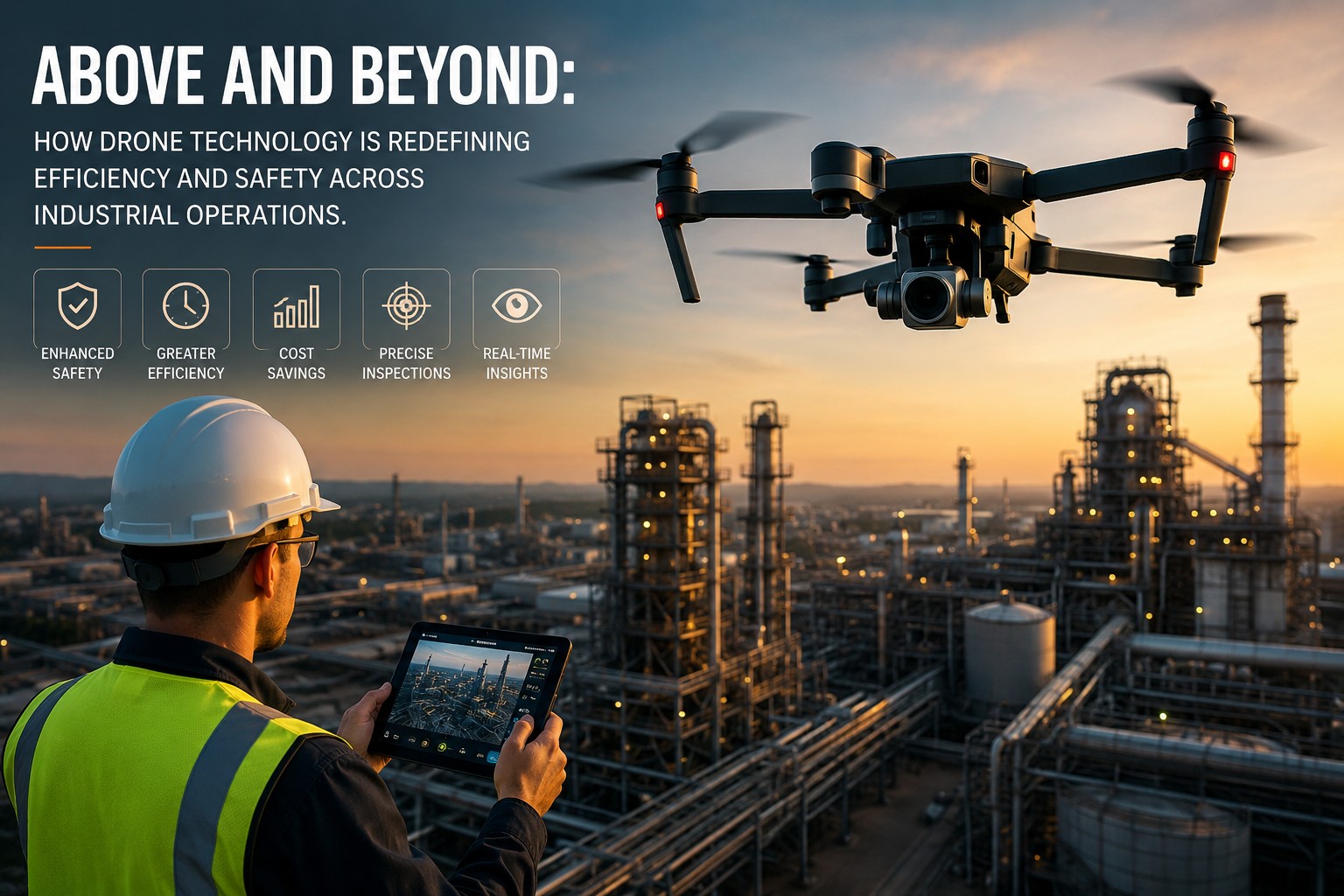
Industrial operations have always depended on inspections, maintenance, safety checks, and accurate information. But as facilities become larger and assets become more complex, traditional methods are increasingly difficult to manage efficiently.
Inspecting a tall structure, storage tank, pipeline, roof, tower, or large industrial facility can require significant preparation. Workers may need specialized access equipment, additional personnel, and hours of on-site work. In some situations, the inspection itself can expose workers to unnecessary risks.
This is where drone technology for industrial operations is creating a meaningful change.
Modern drones can capture high-resolution imagery and other forms of aerial data from areas that may be difficult, expensive, or hazardous for people to access. More importantly, organizations can use that information to make faster and better-informed decisions.
The real opportunity, however, isn't simply putting a drone in the air. It's integrating drone operations into the way an organization already works.
Why Industrial Organizations Are Turning to Drones
For many companies, the biggest attraction of industrial drones is simple: better visibility with less operational disruption.
A drone can inspect large areas in significantly less time than a traditional manual process. An inspection team can review aerial imagery, identify areas that require closer attention, and then determine where physical inspection is actually necessary.
This approach can save time while allowing skilled workers to focus on tasks that genuinely require human expertise.
Drones are particularly valuable for infrastructure, construction, energy, utilities, manufacturing, transportation, telecommunications, and other industries where large or difficult-to-access assets need regular monitoring.
Improving Safety Without Removing Human Expertise
Safety is one of the most important reasons companies are adopting drone inspection technology.
Industrial workers may regularly operate around elevated structures, heavy equipment, remote assets, or challenging environments. While safety procedures can reduce risk, removing unnecessary exposure altogether is often even better.
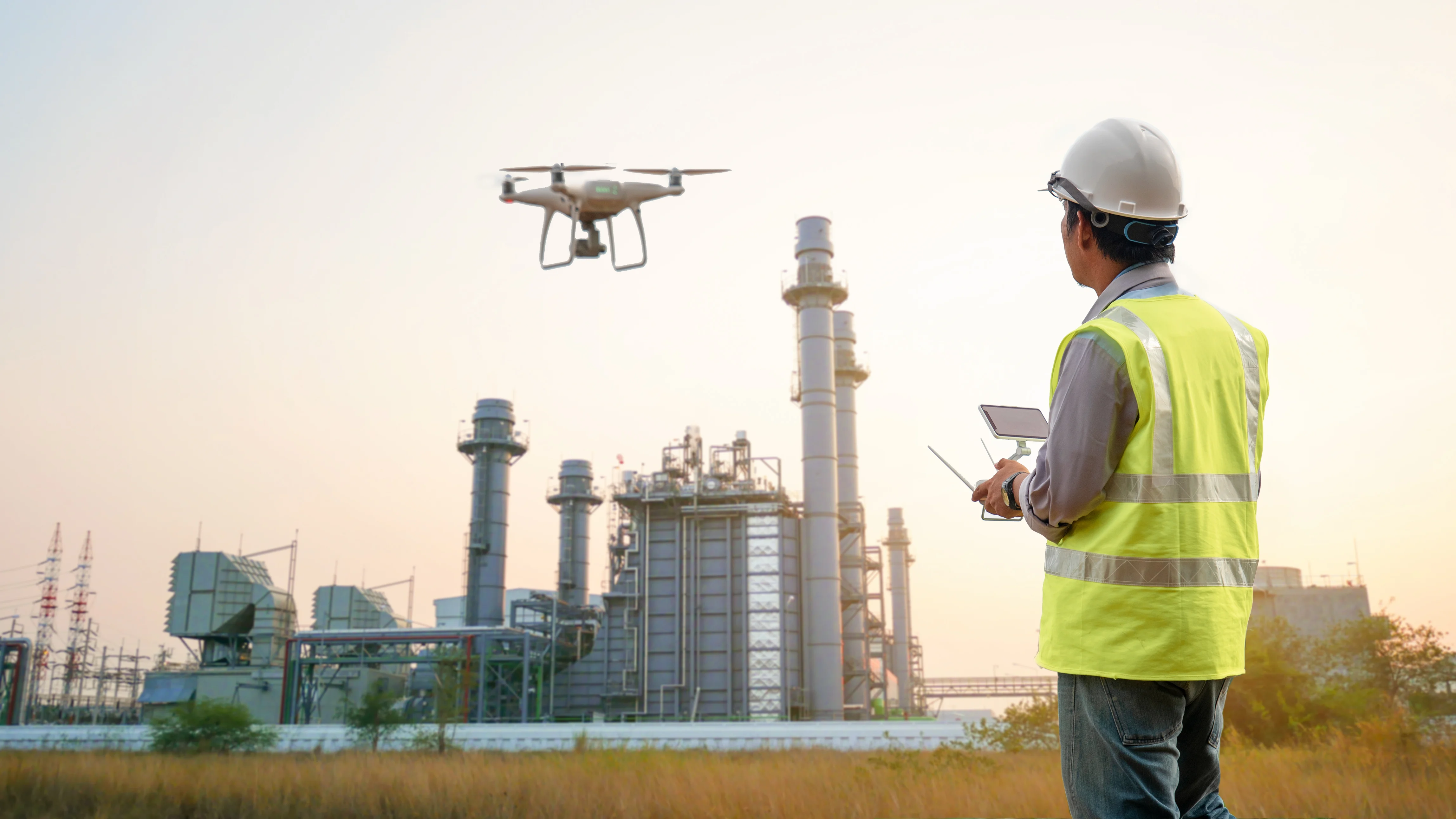
A drone can provide an initial visual assessment without requiring a worker to immediately climb a structure or enter a difficult area.
This doesn't mean drones replace professional inspectors. In many cases, the opposite is true. Drones allow inspectors to spend their time and expertise more effectively by helping them identify where detailed physical inspection is required.
The goal is not to replace people. The goal is to make their work safer and more productive.
Faster Inspections Can Mean Faster Decisions
In industrial environments, delays can become expensive.
When an inspection takes longer than expected, maintenance schedules can be affected. Equipment may remain unavailable, projects can slow down, and operational teams may have to wait for information before taking action.
Drone-based inspections can shorten the information-gathering process.
Instead of manually accessing every part of an asset, operators can use drones to quickly capture detailed visual information. Teams can then review the data and prioritize areas that require further investigation.
This can create a more efficient workflow:
Capture → Analyze → Identify → Inspect → Act
The faster an organization moves through this process, the faster it can respond to potential problems.
Turning Drone Images Into Useful Asset Intelligence
One of the biggest advantages of modern drone operations is that the information collected during an inspection doesn't have to disappear after the flight.
Organizations can store inspection imagery and compare it with data from previous flights.
Over time, this creates a visual history of an asset.
Teams can identify changes in structures, monitor recurring issues, compare maintenance conditions, and determine whether a particular problem is getting worse.
This makes drones valuable not only for individual inspections but also for long-term asset monitoring.
The difference is important. A drone isn't just taking photographs. It can become part of an organization's asset intelligence strategy.
Where AI Fits Into Drone Operations
The combination of drones and artificial intelligence is creating another major opportunity for industrial organizations.
A single drone inspection can generate hundreds or thousands of images. Manually reviewing every image can be time-consuming, particularly when organizations operate across multiple facilities.
AI-powered image analysis can help identify visual patterns or potential anomalies that deserve human attention. Depending on the application, this could include visible cracks, corrosion, surface damage, missing components, or other changes.
AI should not be viewed as a replacement for experienced professionals. Instead, it can act as another layer of analysis that helps teams find relevant information faster.
The future of industrial inspection is likely to involve a combination of drones, sensors, AI, data platforms, and human expertise.
Drones Can Support Predictive Maintenance
Traditional maintenance often depends heavily on fixed schedules. An asset is inspected because the next inspection date has arrived.
Drone technology can support a more condition-based approach.
When organizations capture consistent inspection data over time, they can observe how an asset changes. A small defect that appears stable may require monitoring, while a defect that is clearly progressing may require earlier intervention.
This creates an opportunity to identify potential problems before they develop into larger and more expensive failures.
For organizations managing thousands of assets, that visibility can become extremely valuable.
The Hidden Challenge: Building a Proper Drone Program
Buying a drone is relatively easy. Building a successful industrial drone program is much harder.
Organizations need to consider pilot training, regulatory compliance, safety procedures, equipment maintenance, data management, standard operating procedures, and emergency processes.
Without these foundations, even an expensive drone can end up sitting unused.
Successful organizations therefore begin with the operational problem rather than the equipment. They identify where drones can create measurable value, develop appropriate procedures, train personnel, and establish clear performance metrics.
This approach turns drone technology from an interesting experiment into a repeatable business capability.
Measuring the ROI of Industrial Drone Technology
For any enterprise technology investment, results matter.
Organizations evaluating drone programs should look beyond the number of flights completed. More meaningful measurements include inspection time saved, reduced worker exposure, lower access costs, faster maintenance decisions, reduced downtime, and improved inspection coverage.
For example, if a drone allows an organization to assess a large asset in a fraction of the time required by traditional methods, that efficiency can translate into measurable operational value.
The strongest drone programs are therefore built around business outcomes—not flight hours.
How SkyIntelli Helps Organizations Build Smarter Drone Operations
SkyIntelli helps organizations move beyond simply purchasing drone equipment and develop practical, scalable drone operations.
Our approach can support organizations with drone program planning, operational readiness, training, safety and compliance, inspection workflows, and long-term program development.
Every organization has different assets, risks, regulations, and operational goals. That's why a successful drone strategy should be designed around the organization's actual requirements rather than following a one-size-fits-all model.
The objective is straightforward: help organizations use drone technology to improve safety, increase efficiency, and turn aerial data into information that supports better decisions.
The Future Is More Than Just Flying Drones
Industrial drone technology is moving quickly. What started as a tool for capturing aerial photographs is becoming part of a much broader digital workflow.
Drones can provide the eyes. AI can help analyze what they see. Data platforms can organize the information. And experienced teams can turn those insights into action.
That combination has the potential to change how industrial organizations inspect, maintain, and manage their assets.
The companies that benefit most will not necessarily be the ones that buy the most advanced drones.
They will be the ones that build the best operational system around the technology.
That's where the real transformation begins.
Frequently Asked Questions
1. How is drone technology improving industrial safety?
Drones can inspect elevated, remote, or difficult-to-access areas without immediately exposing workers to those environments. This can reduce unnecessary safety risks while giving inspection teams better visibility.
2. What are industrial drones commonly used for?
Industrial drones are used for asset inspections, infrastructure monitoring, construction progress, surveying, facility monitoring, emergency response, environmental assessment, and maintenance planning.
3. Can drones reduce industrial inspection costs?
Yes. Depending on the application, drones can reduce inspection time, access equipment requirements, travel, labor requirements, and operational disruption. Actual savings depend on the specific inspection workflow.
4. Can AI analyze drone inspection data?
Yes. AI and computer vision can help analyze large amounts of drone imagery and identify potential anomalies. Human experts should still review and validate important findings.
5. Can drone inspections support predictive maintenance?
Yes. Repeated drone inspections can create historical visual data that helps organizations identify changes in asset condition and prioritize maintenance.