The Future of Autonomous Aerial Operations: Everything You Need to Know About Drone-in-a-Box Technology
How Fully Automated, Remotely Deployable Drone Systems Are Transforming Surveillance, Inspection, and Emergency Response Across Industries
The drone industry has undergone a remarkable transformation over the past decade. What began as a hobbyist technology — quadcopters buzzing over backyards and capturing shaky vacation footage — has evolved into a sophisticated ecosystem of professional aerial systems that are fundamentally changing how industries monitor infrastructure, respond to emergencies, inspect assets, and secure large-scale facilities. At the leading edge of this evolution sits one of the most compelling innovations in unmanned aviation: the drone-in-a-box system.
For organizations that require persistent aerial surveillance, rapid response capability, or routine automated inspection without the logistical burden of deploying human pilots for every flight, drone-in-a-box technology represents a paradigm shift in operational efficiency. Understanding what this technology offers — and what regulatory compliance looks like in the current environment — is essential for any organization considering autonomous drone deployment.
What Is a Drone-in-a-Box System?
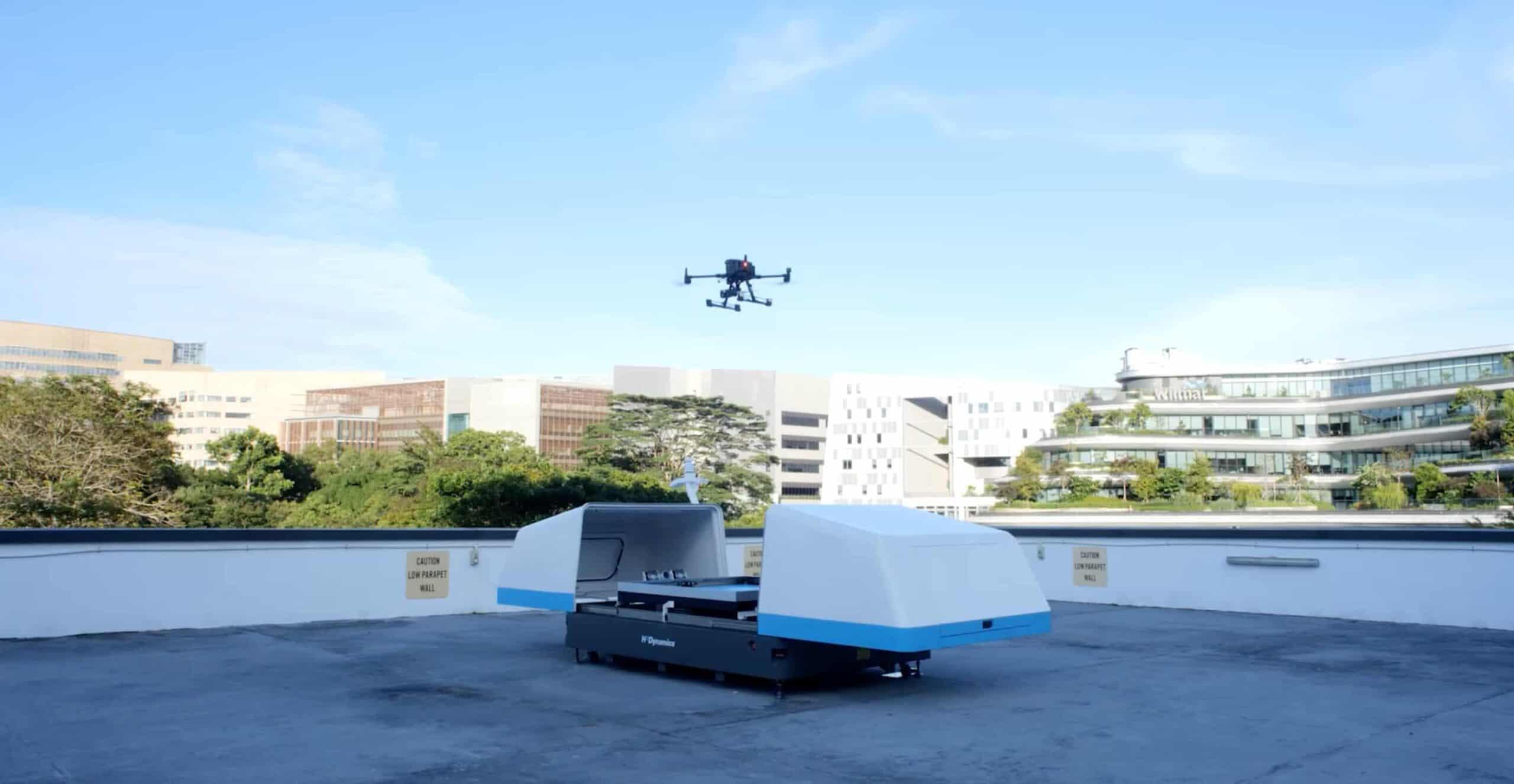
At its most fundamental level, a drone-in-a-box system is an autonomous drone deployment platform that integrates an unmanned aerial vehicle with a self-contained docking station capable of launching, recovering, recharging, and storing the drone without human intervention on site. The entire system operates under remote command, typically through a cloud-based software platform that allows operators to dispatch missions, monitor live feeds, review recorded footage, and manage the drone's operational status from anywhere in the world.
The docking station — the "box" — serves as the drone's permanent field base. It protects the aircraft from weather between missions, automatically charges the battery upon return, and in advanced systems, performs basic diagnostic checks to confirm airworthiness before the next deployment. This closed-loop automation eliminates the need for on-site pilots, dramatically reduces operational costs, and enables a level of deployment frequency and consistency that human-operated systems simply cannot match.
Industries Being Transformed by Autonomous Drone Deployment
The applications for drone-in-a-box technology span an extraordinary range of industries and use cases, each leveraging the core capabilities of persistent availability, rapid deployment, and automated operation in different ways.
Critical Infrastructure Protection
Power generation facilities, water treatment plants, oil and gas pipelines, and telecommunications infrastructure require continuous security monitoring across vast physical footprints. Traditional security approaches — manned patrols, fixed cameras, perimeter fencing — leave coverage gaps that autonomous drone systems can fill with dynamic, responsive aerial surveillance. A drone-in-a-box system stationed at a critical facility can be airborne within seconds of a security alert, providing live situational awareness to security operations centers before ground teams can respond.
Public Safety and Emergency Response
Law enforcement agencies, fire departments, and emergency management organizations are rapidly adopting autonomous drone platforms for scene assessment, search and rescue operations, and real-time incident monitoring. A drone deployed from a fixed station near a highway corridor can reach an accident scene, provide aerial imagery to responding units, and assist with traffic management — all before the first patrol car arrives. In wildland fire operations, persistent aerial coverage of fire perimeters provides incident commanders with situational awareness that fundamentally changes decision-making quality.
Industrial Inspection and Asset Management
Routine inspection of towers, wind turbines, solar arrays, transmission lines, and industrial facilities traditionally requires significant manual labor, specialized equipment, and — in many cases — dangerous working-at-height activities. Automated drone inspection platforms can execute scheduled inspection flights, capture high-resolution imagery and thermal data, and deliver processed reports to asset managers without any of the safety risks or logistical complexity of conventional inspection methods.
The Regulatory Landscape: Why Certification Matters
For organizations considering autonomous drone deployment in the United States, regulatory compliance is not optional — it is the foundation upon which every operational plan must be built. The Federal Aviation Administration governs all unmanned aircraft operations in national airspace, and the requirements for beyond visual line of sight operations, automated flights, and persistent aerial surveillance are specific, detailed, and strictly enforced.
Investing in a FAA Certified Drone in a Box platform ensures that the system has been evaluated, tested, and approved for operation within the regulatory framework that governs American airspace. This certification is not merely a bureaucratic checkbox — it represents a verified assurance that the system meets the safety, reliability, and operational standards that the FAA has determined are necessary for autonomous drone operations to coexist safely with manned aviation and other airspace users.
Operating non-certified drone systems in applications that require FAA authorization exposes organizations to significant legal liability, potential fines, and the operational risk of flying equipment that has not been independently validated for the demands of persistent autonomous deployment. Certification is the professional standard, and it should be a non-negotiable requirement in any procurement evaluation.
Key Capabilities to Evaluate in Any Drone-in-a-Box Platform
When assessing autonomous drone systems for organizational deployment, several technical and operational capabilities deserve careful evaluation beyond basic flight performance.
All-Weather Operational Capability
A drone-in-a-box system that can only operate in ideal conditions delivers limited value as a persistent monitoring or rapid response platform. Look for systems with meaningful wind resistance ratings, precipitation tolerance, and temperature operating ranges that match your geographic deployment environment.
Communication and Data Architecture
The value of aerial surveillance is only realized when data reaches decision-makers in real time. Evaluate the system's communication infrastructure — cellular, satellite, or dedicated RF links — and its data processing pipeline, including onboard edge computing capability, cloud integration, and cybersecurity architecture.
Autonomy and Failsafe Design
True autonomous operation requires sophisticated failsafe systems that manage lost link scenarios, airspace conflicts, and unexpected environmental conditions without human intervention. Evaluate the depth of the system's autonomy stack and its behavior under off-nominal conditions.
A New Standard in Autonomous Aerial Intelligence
At Skyintelli, Inc, we are at the forefront of autonomous drone technology, delivering FAA-compliant drone-in-a-box solutions that empower organizations to achieve persistent aerial awareness, rapid response capability, and operational efficiency that legacy approaches cannot match. Our platform combines advanced autonomous flight technology, robust regulatory compliance, and industry-leading data integration to deliver aerial intelligence that transforms how our clients protect assets, respond to incidents, and manage operations at scale. Contact our team today to discover how autonomous drone deployment can elevate your organization's capabilities to an entirely new level.